Microbiology can appear daunting when you don’t know what to focus on. Fortunately, microbiology questions tested on the ASCP exam focus on diagnosis. In a real laboratory, the organism would arrive in some media. You would ask yourself, “I wonder what this organism is?” You would then culture and gram stain, or perform some other tests to figure out what you’re dealing with.
Each organism produces a unique combination of results based on certain testing criteria. In many laboratories, all tests may be performed quickly on a single strip of reagents (API), which change color based on particular enzymatic properties of the organism. However, it’s not practical to memorize positives and negatives for every type of organism. I find that using flowcharts - as if I am conducting manual laboratory testing - make things easier for me.
These are the flowcharts I produced. Once I had these, there was very little additional work for me to do. I only did questions to solidify my recall of the information on the charts.
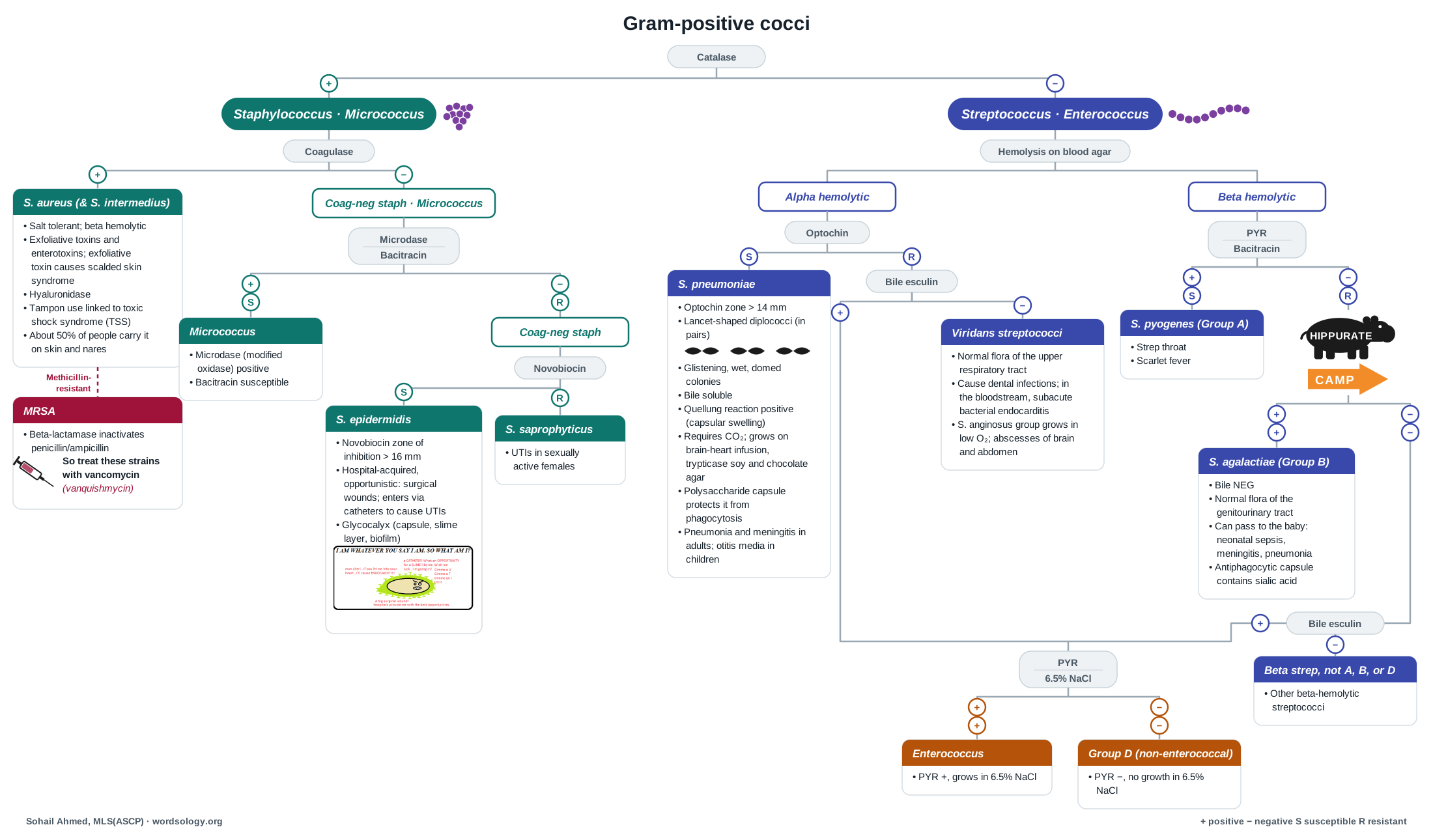
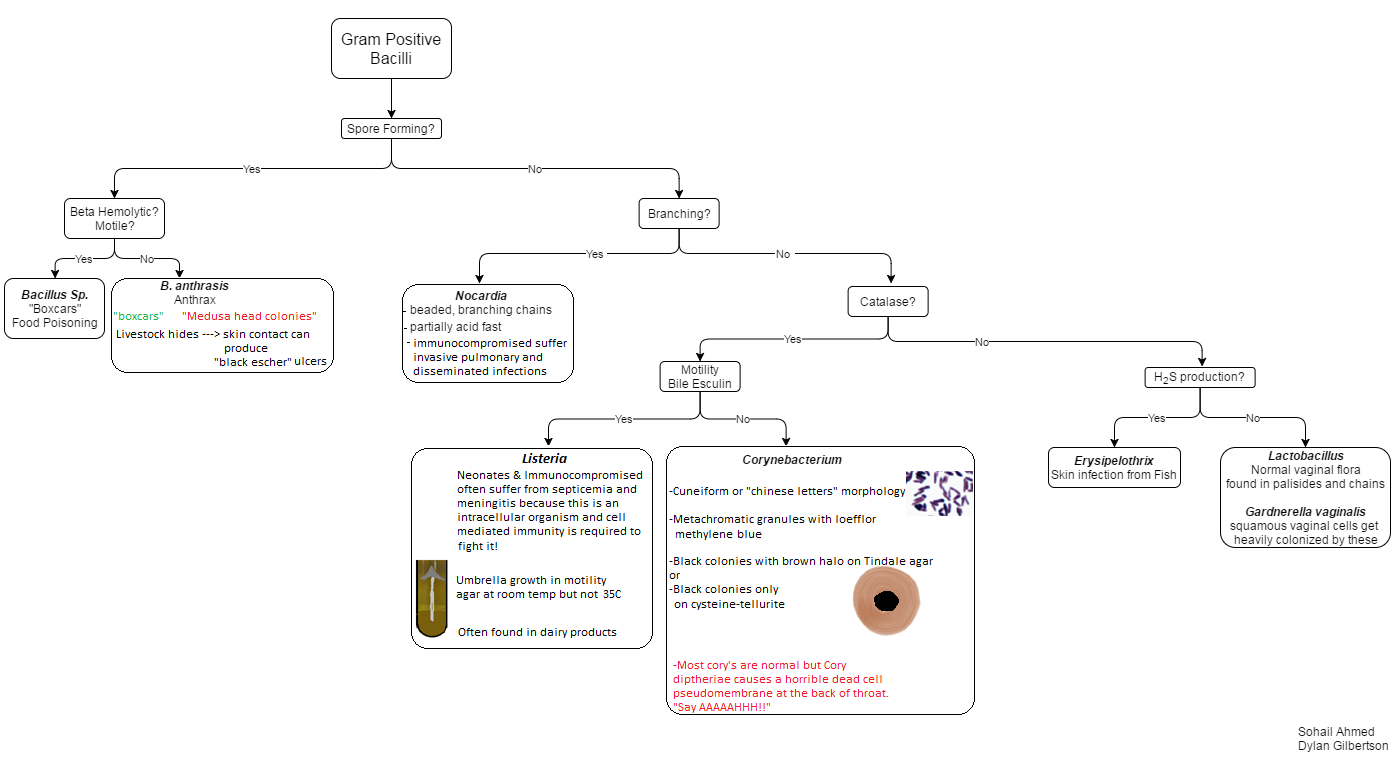
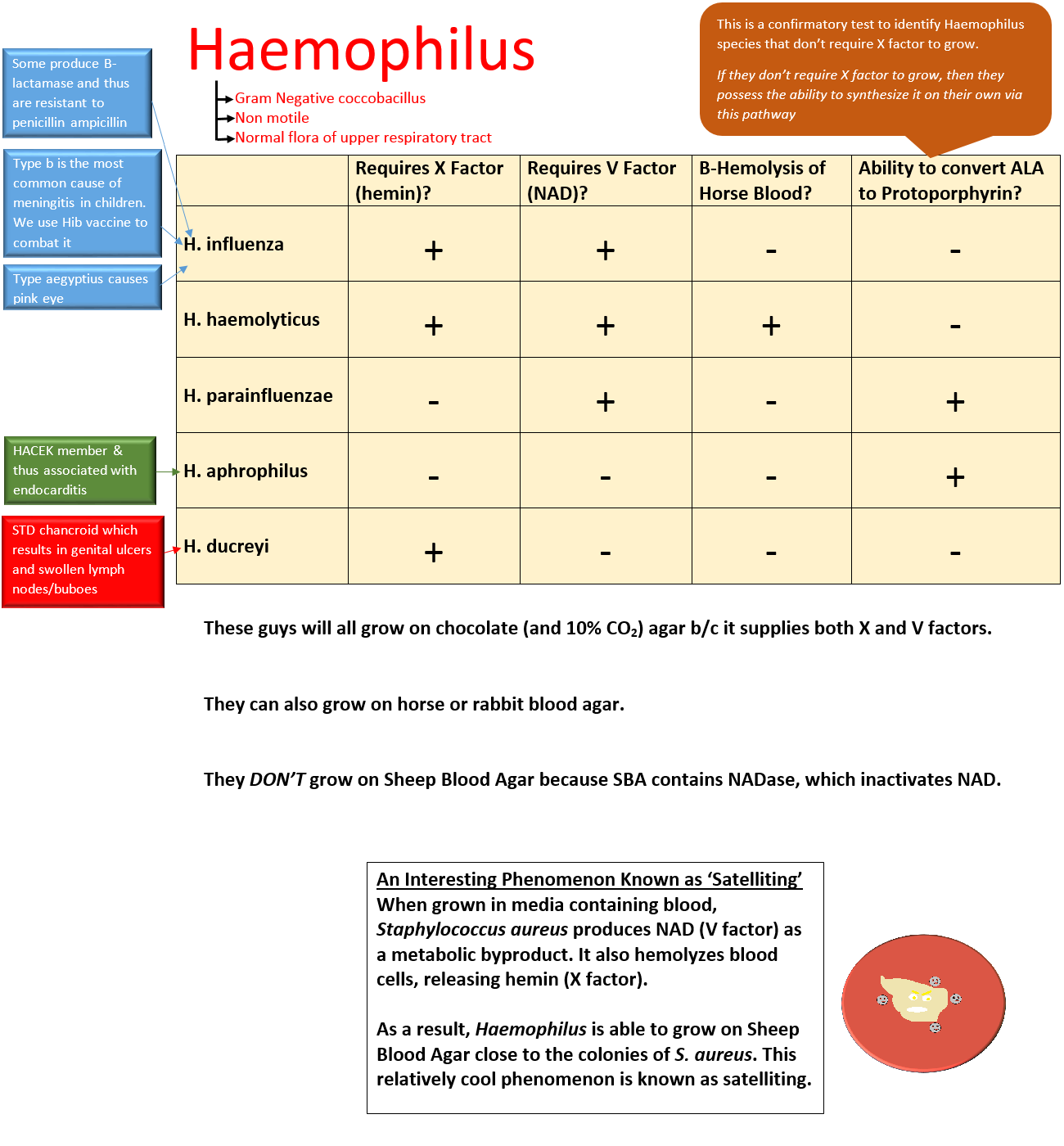
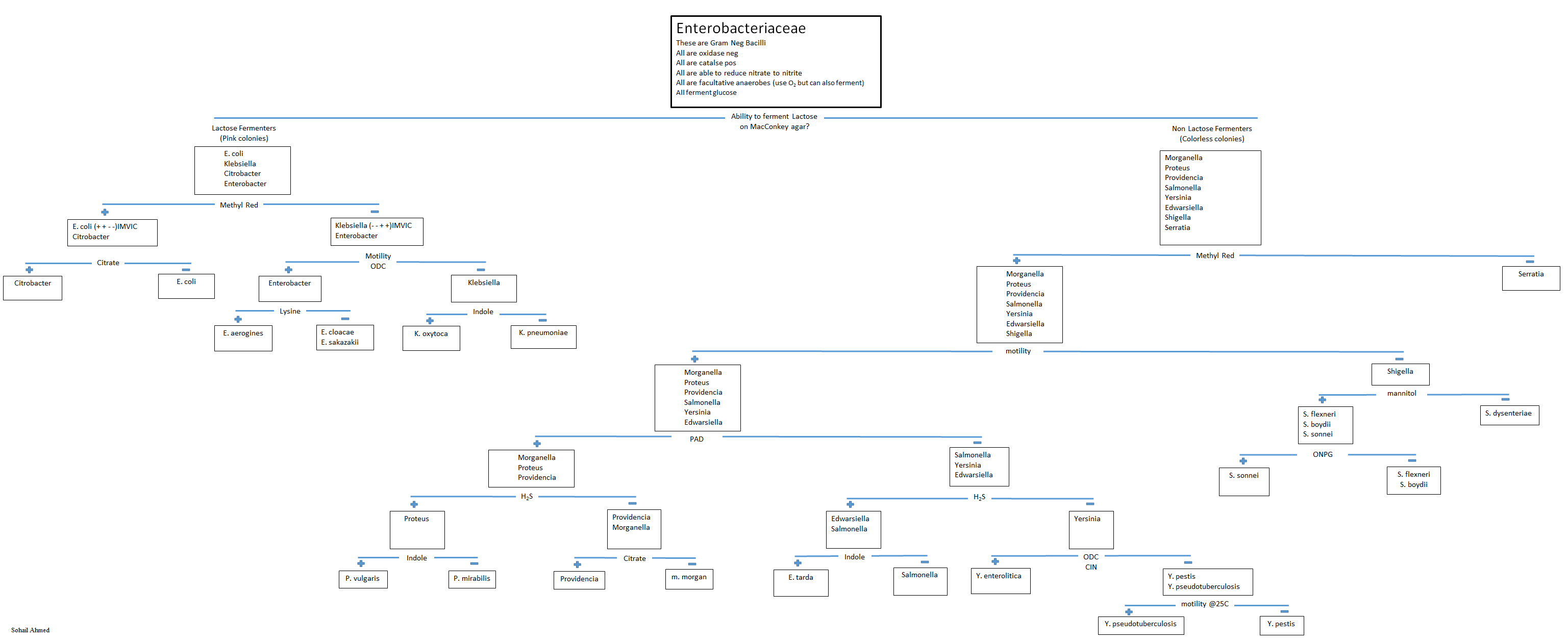
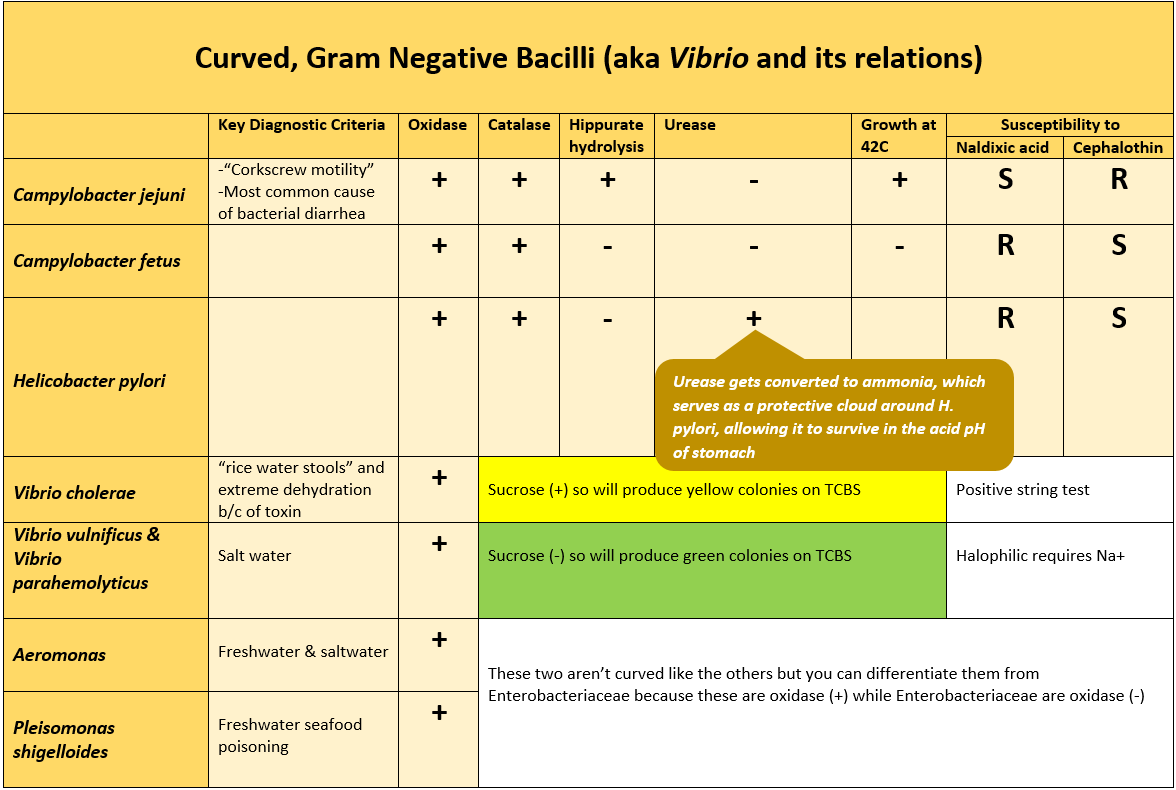
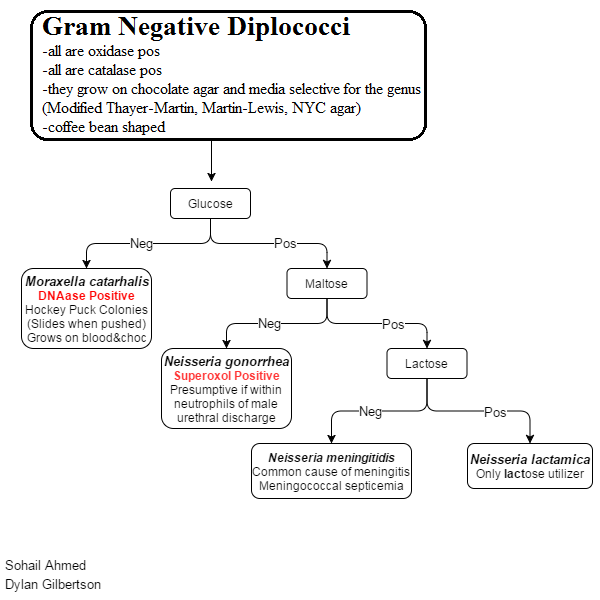
An excellent microbiology professor suggested using tables to see what’s unique about a single organism, as it can help you memorize what is so similar about the others. For example, referring to the table of Gram Negative Diplococci, notice how moraxella catarrhalis is negative for acid production from oxidation of glucose, maltose and lactose. Also notice how only one organism is superoxol or DNase positive. By memorizing these few unique characteristics, you’ve essentially memorized all the others!
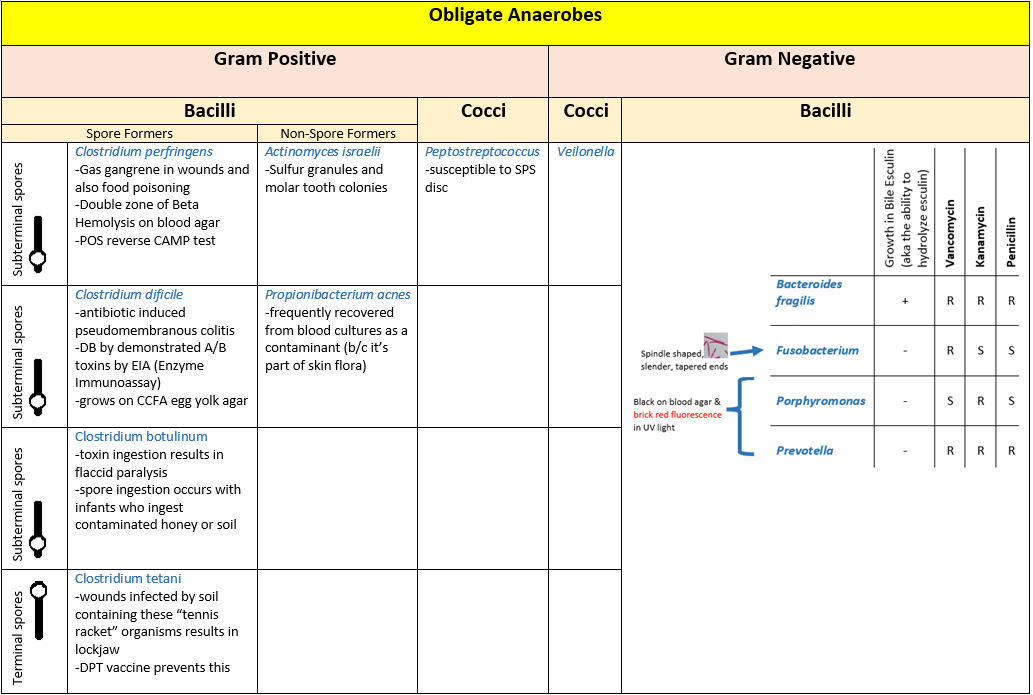
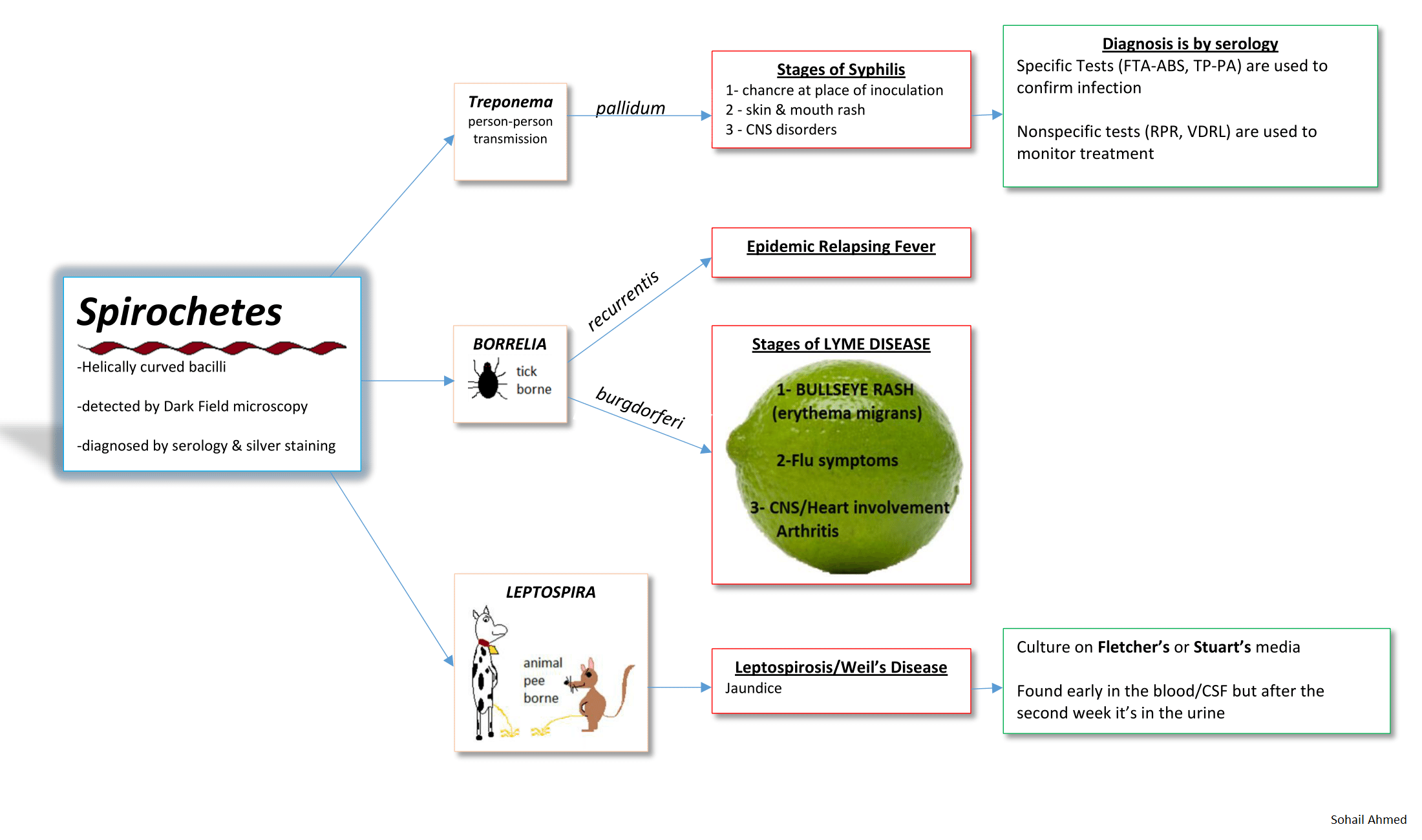
The (H)ACEK organisms
Unfortunately, you just have to memorize some things. For example, here are a few must-know properties of the (H)ACEK organisms. All four are normal oral flora.
| Organism | Oxidase | Key facts |
|---|---|---|
| Actinobacillus (now Aggregatibacter) | − | Endocarditis; periodontitis |
| Cardiobacterium hominis | + | Endocarditis |
| Eikenella corrodens | + | Pits the agar; bleach odor; fight bites (clenched-fist injuries) |
| Kingella | + | Pits the agar; joint damage |
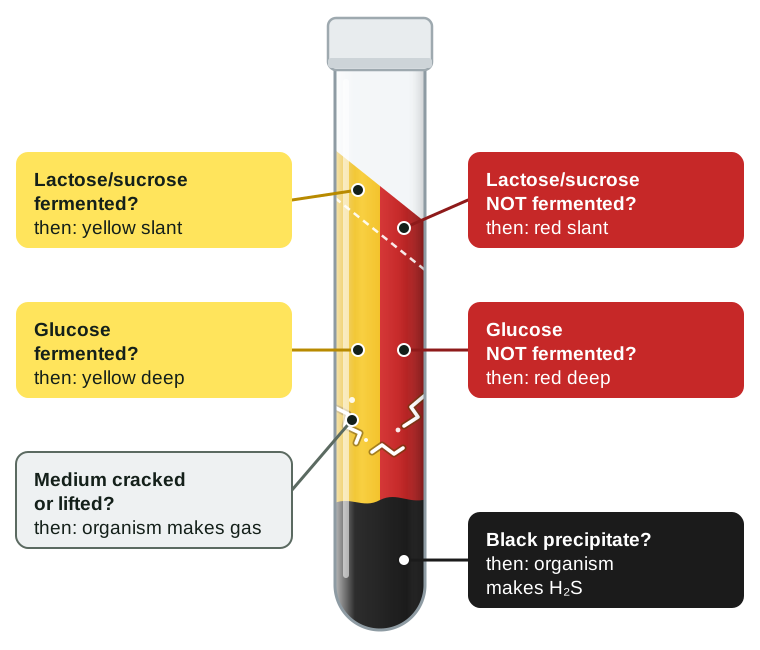
Interpreting a Triple Sugar Iron (TSI) agar slant
Parasites
These are the parasites I had to know for school. Only one showed up on my licensing exam so this is decidedly NOT high-yield, although it may help during coursework. I would definitely urge you to know the similarities/differences between the four major Plasmodium species (number of merozoites per schizont; shape, etc).
Intestinal
Protozoa single cell
Amoebae
- Entamoeba histolytica
- E. dispar
- E. hartmanni
- E. coli
- Endolimax nana
- Blastocystis hominis
Flagellates
- Dientamoeba fragilis
- Giardia duodenalis (lamblia)
- Pentatrichomonas hominis
Ciliates
- Balantidium coli
Sporozoa
- Cryptosporidium
- Cystoisospora (Isospora) belli
Helminths multicellular
Nematodes
- Trichuris trichiura
- Enterobius vermicularis
- Necator americanus
- Ancylostoma duodenale
- Strongyloides stercoralis
- Ascaris lumbricoides
Cestodes
- Diphyllobothrium latum
- Hymenolepis nana
- Taenia saginata
- Taenia solium
Trematodes
- Fasciolopsis buski
- Fasciola hepatica
- Clonorchis sinensis
- Paragonimus westermani
Schistosomes
- S. mansoni
- S. japonicum
- S. haematobium
Extraintestinal
Protozoa single cell
Blood & tissue
- Toxoplasma gondii
- Leishmania
- Babesia
- Trypanosoma
Plasmodium
- P. falciparum
- P. malariae
- P. ovale
- P. vivax
Free-living amoebae
- Acanthamoeba
- Naegleria fowleri
Urogenital
- Trichomonas vaginalis
Helminths multicellular
Nematodes
- Trichinella spiralis
- Dracunculus medinensis
Filariae
- Wuchereria bancrofti
- Brugia malayi
- Loa loa
- Onchocerca volvulus
Cestodes
- Echinococcus granulosus